
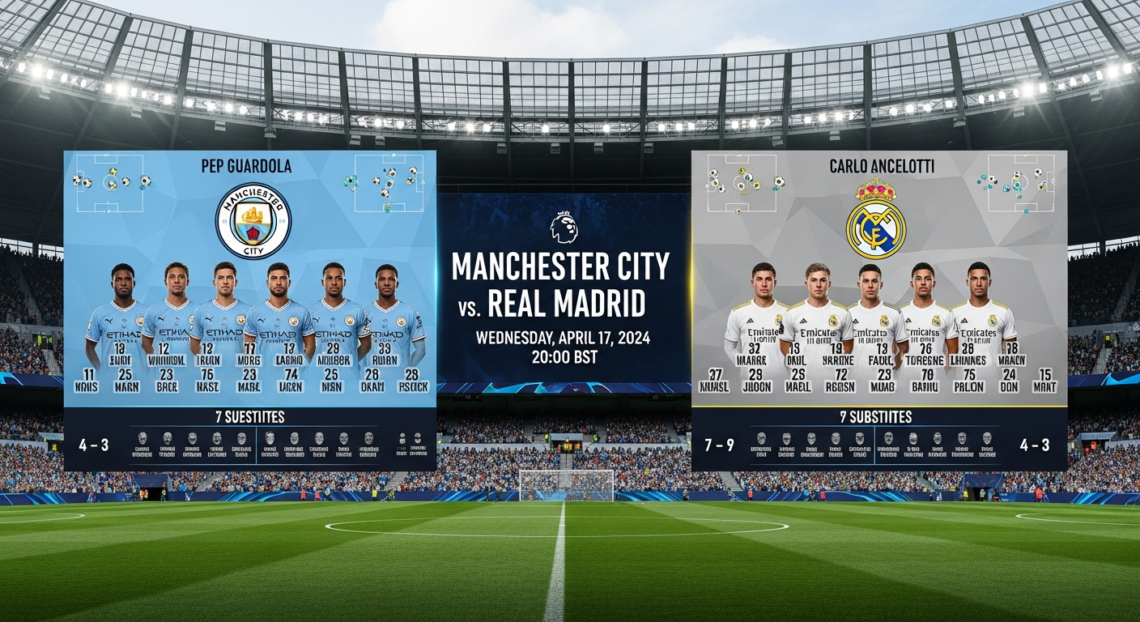
The Man City vs Real Madrid lineups are always a major talking point before any big match. Fans are eager to see who starts, who is on the bench, and what formations the managers choose. These lineups reveal tactics, strategies, and potential game changers. In Champions League matches, both teams pick their strongest squads to secure victory. Manchester City and Real Madrid are football giants, full of world-class talent and smart managers who know how to get the best out of their players. Knowing the lineups gives fans and analysts insight into how the game might unfold and which players will make a difference on the pitch.
Match Overview: Real Madrid vs Manchester City
In the most recent Champions League clash, Manchester City defeated Real Madrid 2–1 in a thrilling encounter. Both teams fielded strong lineups, showcasing star players in key positions. The match featured exceptional goals from Rodrygo for Madrid and Haaland and O’Reilly for City. Fans witnessed a battle of different styles, with Madrid focusing on midfield control and quick transitions, while City emphasized possession and attacking through wide spaces. The confirmed lineups provided insight into the managers’ tactical intentions and highlighted the players expected to shine.
Real Madrid Confirmed Lineup
Here is how Real Madrid lined up against Manchester City:
| Position | Player |
| Goalkeeper | Thibaut Courtois |
| Defender | Federico Valverde |
| Defender | Antonio Rüdiger |
| Defender | Raúl Asencio |
| Defender | Álvaro Carreras |
| Midfield | Aurélien Tchouaméni |
| Midfield | Dani Ceballos |
| Midfield | Jude Bellingham |
| Midfield | Rodrygo |
| Forward | Vinícius Júnior |
| Forward | Gonzalo García |
This lineup balanced youth and experience. Courtois offered stability in goal, while Valverde and Bellingham controlled the midfield. Rodrygo and Vinícius Jr. provided pace and creativity in attack, making Madrid’s offense dynamic and dangerous.
Manchester City Confirmed Lineup
Manchester City’s starting XI featured a strong attacking setup:
| Position | Player |
| Goalkeeper | Gianluigi Donnarumma |
| Defender | Josko Gvardiol |
| Defender | Rúben Dias |
| Defender | Nico O’Reilly |
| Midfield | Matheus Nunes |
| Midfield | Bernardo Silva |
| Midfield | Nico González |
| Midfield | Phil Foden |
| Forward | Erling Haaland |
| Forward | Jérémy Doku |
| Forward | Rayan Cherki |
City’s lineup focused on attack and creativity. Haaland led the front line, supported by Foden and Doku, while Silva and González controlled midfield play. The formation allowed City to dominate possession and create multiple scoring opportunities.
Lineup Comparison: Formation and Tactics
Real Madrid typically used a 4-4-2 or 4-3-3 hybrid formation, focusing on quick transitions and width from the wingers. Manchester City favored a 4-3-3 formation emphasizing possession and high pressing. Both formations reflect contrasting strategies: Madrid relies on counter-attacks, while City aims to control the ball and patiently build chances. Observing these lineups helps understand which team may dominate midfield or attack and highlights the importance of key positions in the game.
Key Players to Watch
Manchester City
- Erling Haaland – Powerful striker and goal-scorer.
- Phil Foden – Creative midfielder with pace and skill.
- Bernardo Silva – Midfield playmaker controlling tempo.
Real Madrid
- Thibaut Courtois – Experienced goalkeeper, crucial for defense.
- Jude Bellingham – Midfield leader with vision and work rate.
- Vinícius Júnior – Quick winger, strong in attacking transitions.
These players are capable of changing the game with one moment of brilliance, and their performance often decides the outcome of big matches.
Bench and Substitutes
Both teams had strong substitutes ready to make an impact. Players like Kylian Mbappé, Arda Güler, and others could enter late to add fresh energy and scoring options. Substitutions are crucial in big matches as they can turn the tide in the final minutes.
Historical Lineups and Trends
Historically, both clubs rely on a combination of experienced stars and young talent in their lineups. Matches between Manchester City and Real Madrid often see tactical battles, with lineups influencing midfield control and scoring opportunities. Managers adjust their starting XI based on opponent strengths and recent form to maximize performance.
Why Lineups Matter
Lineups reveal the manager’s plan, formation, and strategy. They help fans, analysts, and fantasy football players predict which players will perform best. Lineups can also indicate whether a team plans to attack aggressively or defend carefully, which is key in high-stakes matches like the Champions League.
FAQs
1. What is a lineup in football?
A lineup is the list of players who start a match. It shows who is on the field first.
2. Are these lineups official?
Yes, the lineups are confirmed starting XI for the match.
3. How do formations like 4-3-3 differ from 4-4-2?
Formations show player positions. A 4-3-3 has more forwards, making it more attacking than 4-4-2.
4. Who scored in the last Man City vs Real Madrid game?
Rodrygo scored for Madrid, and Haaland and O’Reilly scored for City.
5. Can lineups change before the match?
Yes, managers can adjust lineups last minute due to injuries or tactical decisions.
6. Why do managers pick different lineups each game?
Teams change lineups based on player form, injuries, and opponent strategy.
Conclusion
The Man City vs Real Madrid lineups show how each manager prepares for one of football’s biggest stages. These lineups highlight star players, tactical decisions, and the balance between experience and youth. Understanding lineups helps fans predict the flow of the match and key moments to watch. Which lineup impressed you the most? Share your thoughts and predictions for the game.